
Collaborative Robots Revolutionizing Gas-Shielded Welding: Precision, Safety, and Efficiency
Time:
2025-04-10 10:23


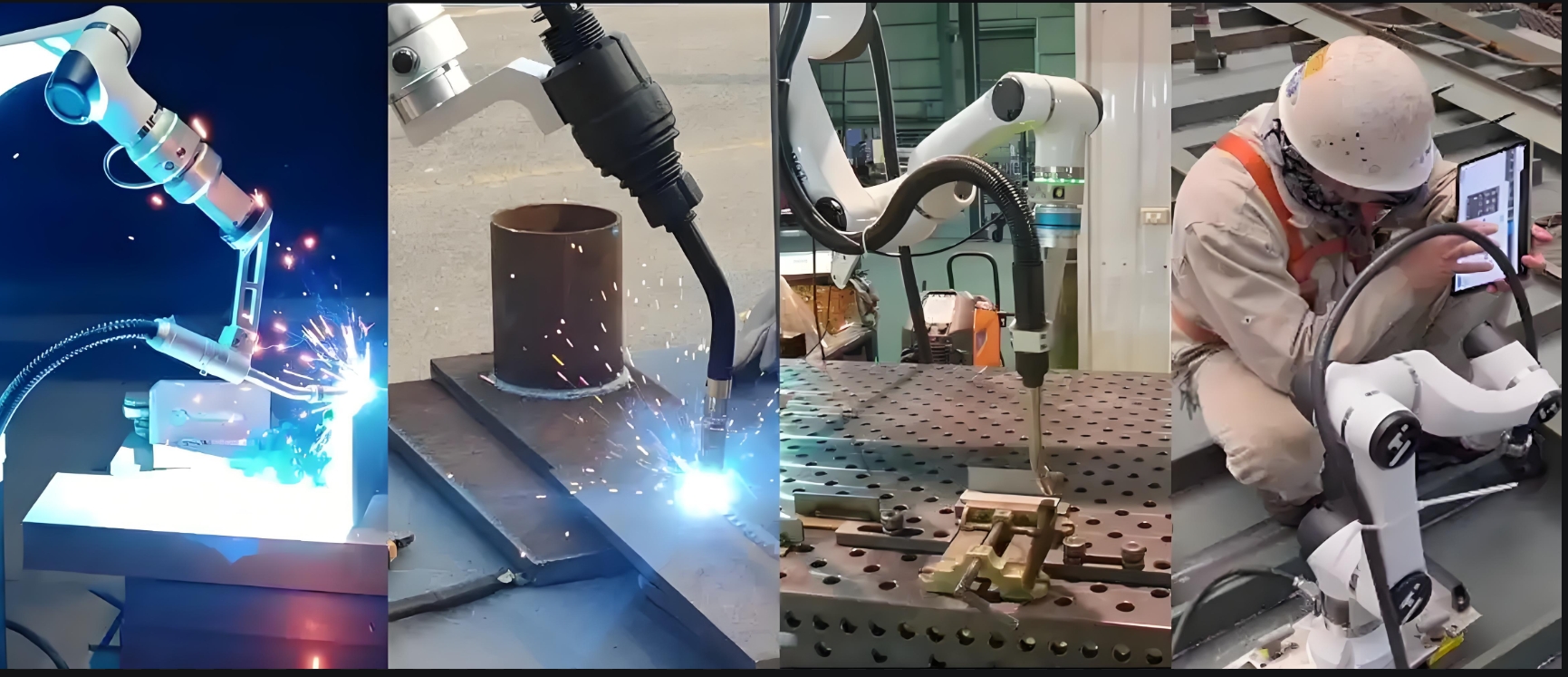
The integration of collaborative robots (cobots) into gas-shielded welding processes, particularly Metal Inert Gas (MIG) welding, is transforming industrial manufacturing. Combining advanced automation with human-centric design, these robots address the growing demand for high-quality welds, operational safety, and adaptability in complex environments. This article explores the technological advancements, key benefits, and real-world applications of collaborative robots in gas-shielded welding.
Why Collaborative Robots for Gas-Shielded Welding?
Gas-shielded welding, a staple in automotive, aerospace, and heavy machinery industries, demands precision, repeatability, and operator safety. Traditional welding robots excel in speed but often lack flexibility, require extensive safety barriers, and struggle in dynamic workspaces. Collaborative robots bridge these gaps by enabling direct human-robot interaction, adaptive programming, and compact deployment.
Key Advantages of Collaborative Welding Cobots
1. Unmatched Precision and Consistency
-
Repeat Positioning Accuracy: ±0.05mm ensures flawless weld seams, critical for structural integrity in automotive chassis or aerospace components.
-
High-Speed Performance: Tool-end speeds up to 3000mm/s reduce cycle times while maintaining weld quality.
-
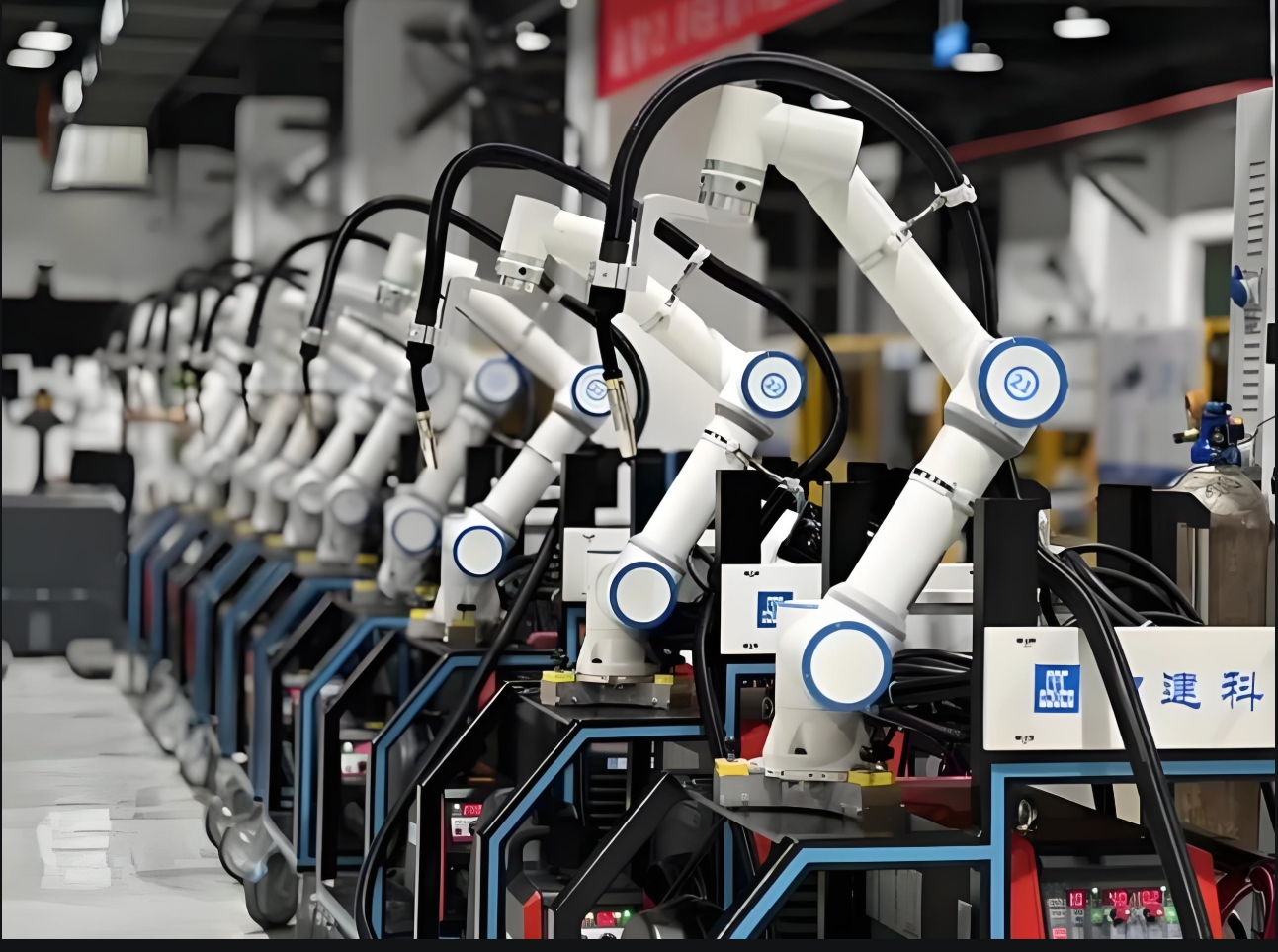
15-Axis Synergy: Expandable via EtherCAT bus, supporting complex multi-angle welding tasks.
2. Enhanced Safety in Shared Workspaces
-
10-Level Collision Protection: Sensors detect and mitigate contact forces, allowing safe operation alongside human workers.
-
XI-Black Box Technology: Records real-time fault data for post-incident analysis and process optimization.
-
Power-Off Protection: Ensures immediate shutdown during emergencies, minimizing risks.
3. Flexibility and Ease of Use
-
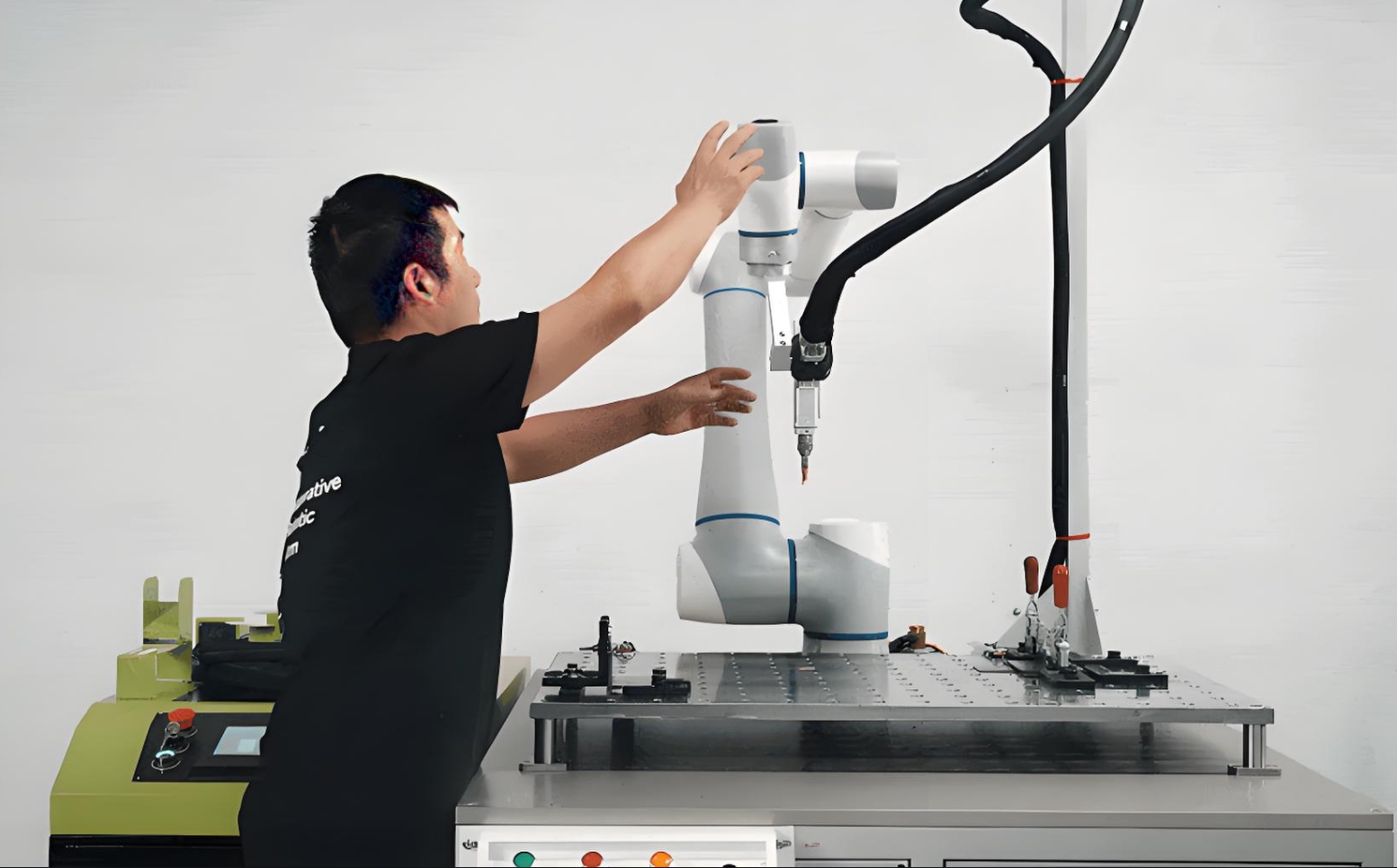
Drag-and-Drop Programming: Intuitive 6-button handle simplifies teaching, reducing setup time by 50%.
-
Arbitrary Angle Installation: Mounts vertically, horizontally, or overhead, ideal for confined spaces.
-
Lightweight Design: At 22kg with a 6kg payload, cobots are easily redeployed across production lines.
4. Robust Performance in Challenging Environments
-
IP65 Protection: Resists dust, moisture, and welding spatter, ensuring durability in workshops.
-
Wide Temperature Range: Operates reliably from -5°C to 55°C, suitable for foundries or outdoor applications.
5. Compliance with Industry Standards
-
IATF16949:2016 Certification: Meets automotive quality benchmarks for defect-free production.
-
Vision System Integration: Compatible with 20/30 vision modules for real-time seam tracking and defect detection.
Technical Specifications at a Glance
| Parameter | XGL405-A/XGL405-AW Model |
|---|---|
| Payload | 6 kg |
| Working Radius | 1460.7 mm |
| Repeat Positioning Accuracy | ±0.05 mm |
| Tool-End Speed | 3000 mm/s |
| Control System | EtherCAT/1 kHz |
| Rated Power | 260 W |
| Operating Temperature | -5°C to 55°C |
| Protection Rating | IP65 |
| Certifications | CB, CE, SEMI S2, NRTL |
Real-World Applications
Automotive Manufacturing
In automotive assembly lines, cobots perform MIG welding on body panels and frames. Their precision ensures consistent weld quality, while collision detection allows safe collaboration with technicians inspecting nearby components. A major European automaker reported a 30% reduction in rework rates after adopting cobots.
Aerospace Component Fabrication
Aerospace manufacturers leverage cobots for welding lightweight alloys. The robots’ ±0.05mm accuracy meets stringent tolerances for turbine parts, and their compact design fits into assembly jigs traditionally inaccessible to bulkier robots.
Heavy Machinery and Construction
For welding thick steel plates in excavators or cranes, cobots deliver high-deposition welds without compromising speed. IP65 protection enables operation in dusty construction sites, while EtherCAT expandability supports integration with positioners and turntables.
Overcoming Traditional Limitations
Traditional welding robots require fixed safety cages and specialized programmers, limiting their use in small-batch or mixed-production environments. Collaborative robots eliminate these barriers by:
-
Reducing Floor Space: Compact size and flexible mounting free up workspace.
-
Lowering Energy Consumption: 260W rated power cuts operational costs by 40% compared to conventional systems.
-
Simplifying Maintenance: Modular components and self-diagnostic functions minimize downtime.
The Future of Collaborative Welding
As industries embrace Industry 4.0, cobots are evolving with AI-driven adaptive welding and cloud-based analytics. Future advancements may include:
-
AI-Powered Weld Monitoring: Real-time adjustments based on thermal imaging or arc stability.
-
Swarm Robotics: Multiple cobots collaborating on large-scale welding projects.
-
Enhanced Material Compatibility: Support for advanced alloys and hybrid welding techniques.
Conclusion
Collaborative robots are redefining gas-shielded welding by merging human dexterity with robotic precision. With features like EtherCAT integration, IP65 ruggedness, and intuitive programming, they empower manufacturers to achieve faster production cycles, safer workplaces, and superior weld quality. As technology advances, these cobots will continue to drive innovation across industries, solidifying their role as indispensable tools in modern manufacturing.
Collaborative,Welding,Robot,Human-Robot,Collaboration,,Industrial,Robotics,High-Precision,Welding
BLOG
Phone:
WhatsApp:
Email:
图片alt标题设置: noahso
表单验证提示文本: Content cannot be empty!
循环体没有内容时: Sorry,no matching items were found.
CSS / JS 文件放置地